

Fit a carbon monoxide (CO) alarm in every room with a fuel-burning appliance, such as a gas boiler, gas fire, wood burner or open fire, and consider one in bedrooms too. As a general guide, place it 1 to 3 metres from the appliance, either on the ceiling at least 300mm from any wall, or on a wall at head height, above doors and windows.
Always follow the alarm manufacturer’s instructions, as positioning advice varies slightly between models. Our carbon monoxide alarms page explains how we can help.
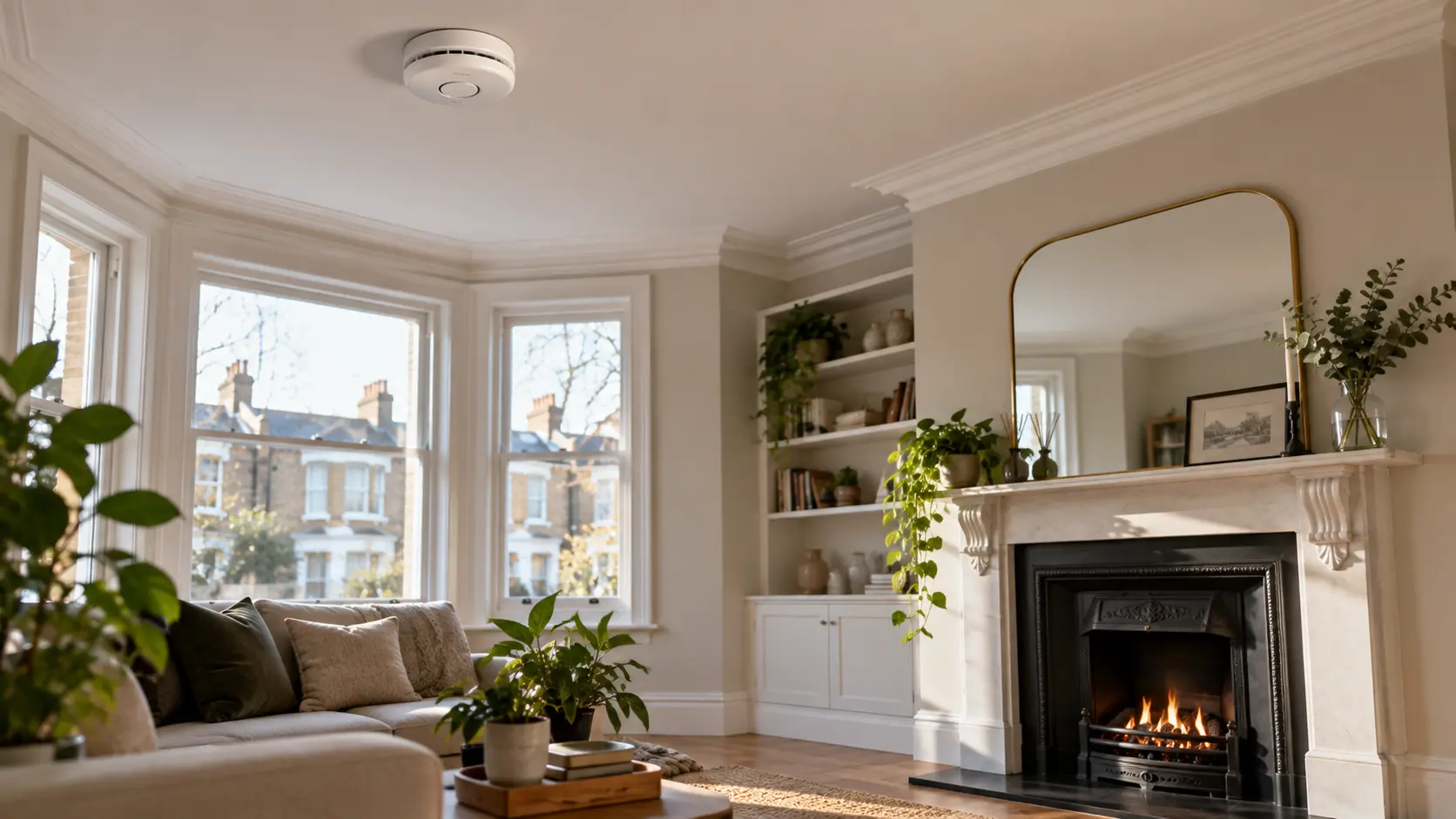
Which rooms need a CO alarm?
- Any room with a fuel-burning appliance: boiler, gas fire, wood burner, open fire, gas water heater
- Bedrooms, especially if near a room with an appliance or a flue passing through
- Rooms a flue runs through, such as a boiler flue running through a loft or cupboard
If your boiler is in a cupboard, fit the alarm in the room the cupboard opens into, following the manufacturer’s guidance.
The right position
| Mounting | General guidance |
|---|---|
| Ceiling | At least 300mm from any wall |
| Wall | At head height, above doors and windows, at least 150mm below the ceiling |
| Distance from appliance | Roughly 1 to 3 metres |
Where not to fit one
- Directly above sinks, cookers or kettles, where steam and fumes can cause false alarms
- In enclosed spaces like cupboards
- Near extractor fans, vents or open windows
- Where furniture or curtains could block it
- In very hot, cold or humid spots, unless the alarm is designed for it
Choosing an alarm
Look for alarms that meet British Standard EN 50291. Options include:
- Battery-powered alarms with a sealed long-life battery
- Mains-powered alarms, sometimes interlinked
- Combined smoke and CO alarms, which must be positioned to suit both functions
Testing and replacing
- Test the alarm regularly using the test button
- Replace batteries if the model uses replaceable ones
- Replace the alarm before its expiry date, usually shown on the unit
- Never ignore a low-battery or end-of-life warning
Rules for landlords
In England, landlords must fit a CO alarm in any room used as living accommodation that contains a fixed combustion appliance (excluding gas cookers), and repair or replace alarms once told they’re faulty. This sits alongside the annual gas safety check. Our landlord services cover both.
An alarm is a backstop, not a fix
A CO alarm warns you there’s a problem. Preventing the problem comes from regular servicing of fuel-burning appliances. Annual boiler and appliance servicing checks combustion, flues and ventilation.
If your alarm sounds: open doors and windows, turn off appliances if safe, get everyone outside, call the National Gas Emergency Service on 0800 111 999 and seek medical advice if anyone feels unwell.
Frequently asked questions
Do I need a CO alarm if I only have a gas hob?
Rules for landlords exclude gas cookers, but a CO alarm is still a sensible precaution in any home with gas appliances, positioned according to the manufacturer’s advice.
Can one CO alarm cover the whole house?
Not usually. CO alarms detect gas near where they’re fitted, so you need one in each room with a fuel-burning appliance, and ideally in bedrooms.
Is a smoke alarm the same as a CO alarm?
No. Smoke alarms detect smoke from fires; CO alarms detect carbon monoxide gas. Combined units do both but must be positioned correctly for each.
Get your alarms and appliances checked
Need CO alarms fitted or your appliances checked? Get in touch and we’ll sort it out for you.