

Most people remember to book a boiler service. Far fewer realise the big hot water cylinder in the airing cupboard needs one too. If yours is an unvented cylinder, the answer is yes: it should be serviced once a year. Unvented cylinders store hot water at mains pressure, and they rely on safety valves and an expansion vessel that need checking regularly. In this post we’ll explain what an unvented cylinder service covers, the warning signs to look out for, and how our appliance servicing team handles it for homes in South London and Kent.
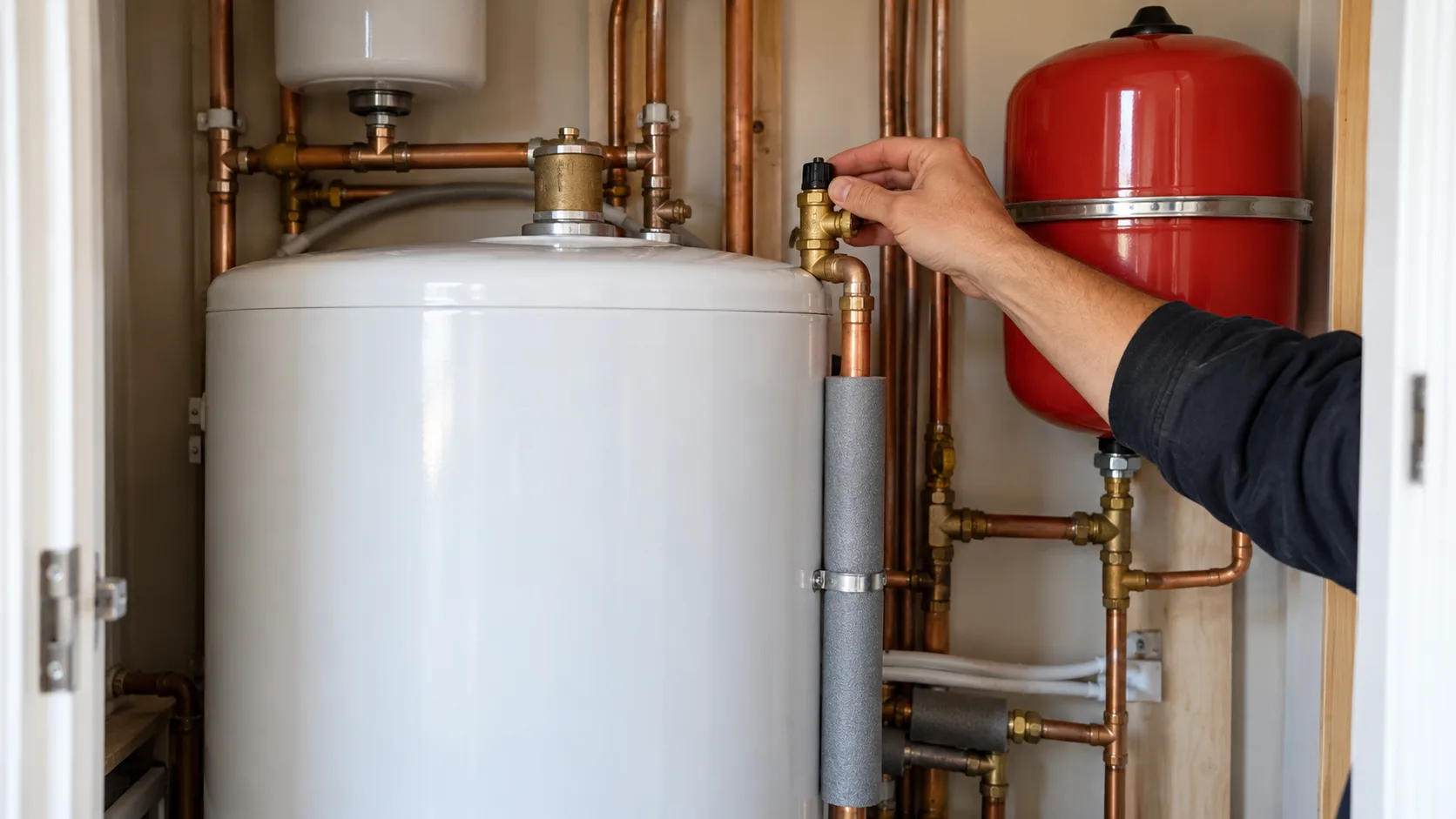
How to tell if your cylinder is unvented
Unvented cylinders are fed straight from the mains, so there’s no cold water tank in the loft feeding them. Look for:
- A cylinder with no tank above it in the loft
- A label from the manufacturer mentioning “unvented”
- An expansion vessel nearby (a small red, white or blue tank), unless it’s a model with an internal air bubble
- Safety valves with copper pipes running to a tundish, a small funnel-shaped fitting
If you’re not sure, send us a couple of photos and we can usually tell you.
Why unvented cylinders need servicing
Because the water is stored under pressure, unvented cylinders have several safety devices. If they fail and go unnoticed, problems can build up over time. A service makes sure:
- The safety valves open and close correctly
- The expansion vessel holds the right air pressure
- The cylinder heats water efficiently
- Small faults are caught before they become breakdowns
Most manufacturers also require an annual service to keep the cylinder’s warranty valid. With more people working from home and using more hot water, the system gets more use than it used to.
What’s checked during an unvented cylinder service
Our G3 qualified engineers check:
- The temperature and pressure relief valve and the expansion relief valve, for correct operation
- The expansion vessel’s air pressure, recharging it if needed
- The internal air bubble on Megaflo-style cylinders without a separate vessel, recharging it if required
- The pressure reducing valve and strainer
- The tundish and discharge pipework, for signs of water passing
- Controls and thermostats, for safe operating temperatures
We can work on direct, indirect and thermal store cylinders. You can also book it alongside your boiler service at a slightly reduced rate, so both are done on one visit.
Signs your cylinder needs attention now
Don’t wait for the annual service if you notice:
- Water running through the tundish, or dripping from a pipe outside
- Hot water pressure dropping or fluctuating
- Hot water much hotter or cooler than usual
- Banging, hissing or humming from the cylinder
- Water around the base of the cylinder
Water passing through the tundish is the most common sign that a valve or the expansion vessel needs attention. It shouldn’t be ignored.
Who can work on an unvented cylinder?
Installing and maintaining unvented cylinders should only be done by an engineer with the right G3 unvented hot water qualification. Don’t adjust or tamper with the safety valves yourself. If you’re curious about how these systems work, our earlier guide to unvented hot water cylinders covers the basics.
Unvented cylinders in South London and Kent homes
Many larger homes around Sidcup, Bromley, Sevenoaks and Bexley switched from loft tanks to unvented cylinders to get better shower pressure from several bathrooms at once. Hard water across much of the area means scale can build up on valves and heating coils, which is another reason an annual check is worth booking.
Frequently asked questions
How often should an unvented cylinder be serviced?
Once a year is the usual recommendation, and most manufacturers require it to keep the warranty valid. Booking it at the same time as your boiler service saves an extra visit.
What happens if I don’t service my unvented cylinder?
Faults like a flat expansion vessel or a sticking valve can go unnoticed, leading to water discharging through the tundish, poor hot water performance and eventually breakdowns. Regular checks also help keep the cylinder’s warranty valid.
Why is water coming out of my tundish?
It usually means the expansion vessel has lost its air charge or a safety valve is letting water through. Both need an engineer with the G3 qualification to check them. Don’t block or adjust the pipework yourself.
Do I need a G3 engineer for a Megaflo service?
Yes. Megaflo and other unvented cylinders should be serviced by an engineer with the G3 unvented hot water qualification, who’s trained to check the safety devices and recharge the air bubble correctly.
Time for a cylinder service?
If your cylinder hasn’t been looked at for a while, give us a call on 020 3722 5095 or drop us a message and we’ll book it in, alongside your boiler service if you’d like.