

For landlords, the first cold week of the year is when the phone starts ringing. A tenant has no heating, the boiler’s locked out, or a pipe has burst in an empty flat. Most of those calls can be avoided with a bit of preparation in October and November. This landlord winter heating checklist covers gas safety, servicing, alarms, pipes and what to tell your tenants. Our landlord services team helps landlords across South London and Kent stay on top of all of it.
1. Make sure the gas safety record is in date
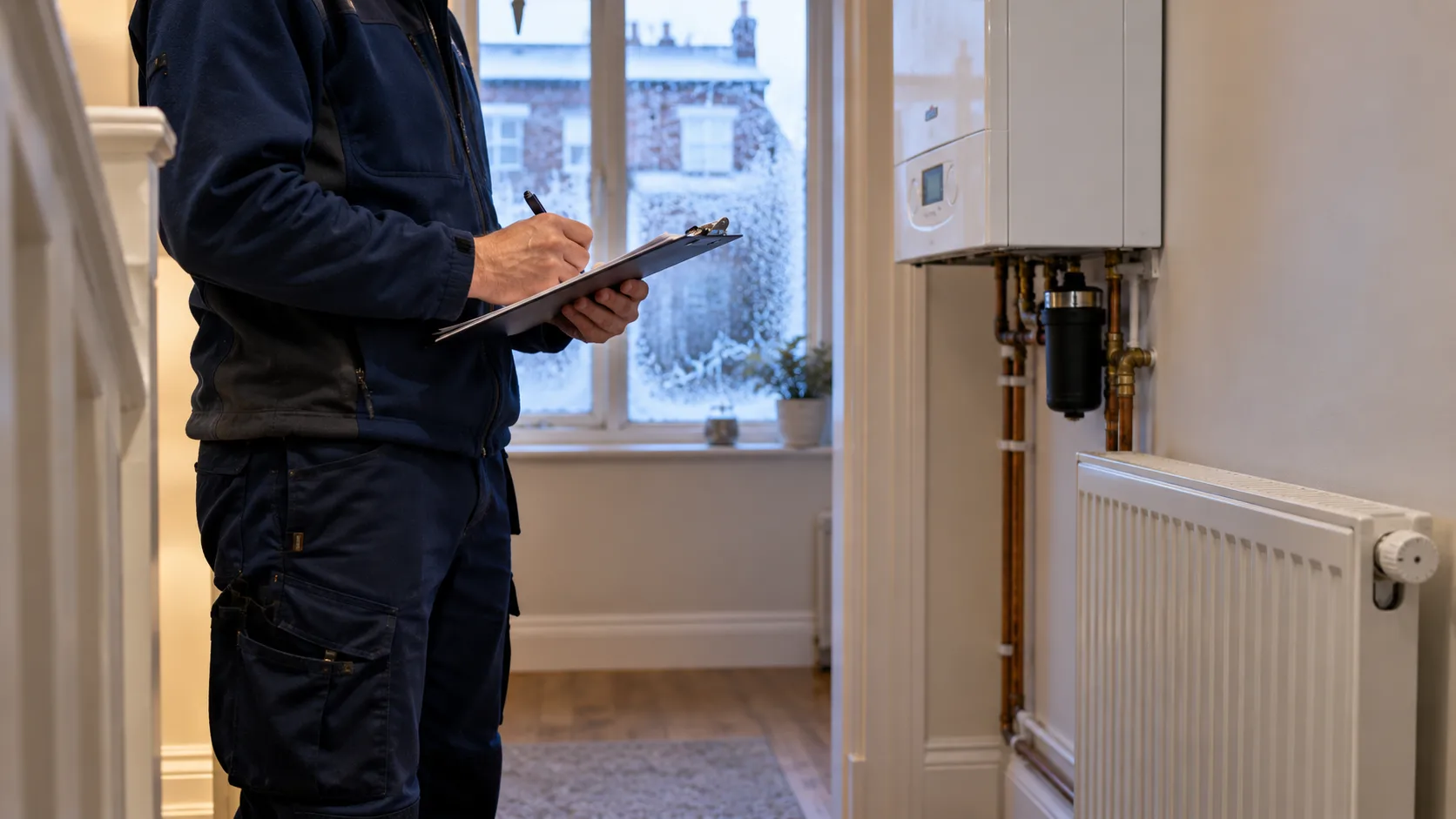
Landlords must have gas appliances, fittings and flues checked every 12 months by a Gas Safe registered engineer, and give tenants a copy of the record. Check the date on yours now. If it’s due in the winter months, consider booking it earlier, before engineers get busy. Our guide on what certificates landlords need covers this in more detail.
2. Book the boiler service
A gas safety check isn’t the same as a full service. The safety check makes sure appliances are safe. A service cleans and tests the boiler so it’s less likely to break down. Most manufacturers also require an annual service to keep the warranty valid. Many landlords book both on the same visit.
3. Check smoke and carbon monoxide alarms
In England, landlords must fit a smoke alarm on every storey used as living accommodation, and a carbon monoxide alarm in any room with a fixed combustion appliance, such as a gas boiler (gas cookers are excluded). Alarms must be checked as working at the start of each new tenancy, and repaired or replaced once a tenant reports a fault. Our carbon monoxide alarms page explains more.
4. Protect pipes from freezing
Frozen and burst pipes cause some of the most expensive winter damage in rental homes.
- Lag pipes in lofts, garages and under floors
- Insulate the cold water tank, if there is one
- Isolate and drain outside taps
- Make sure tenants know where the stopcock is
- Check the boiler’s condensate pipe is lagged if it runs outside
5. Bleed and balance the radiators
Cold spots at the top of radiators mean trapped air. Bleeding them, or having them balanced so every room heats evenly, cuts down on “my bedroom’s always cold” complaints. If radiators are cold at the bottom, there may be sludge in the system.
6. Plan for empty properties
Void periods over winter are a risk. If a property will be empty:
- Leave the heating on a low setting or frost protection
- Arrange regular checks if you can
- For long voids, consider turning off the water and draining the system down
- Check your insurance policy’s rules on unoccupied properties
7. Give tenants a simple winter guide
A one-page note can save a lot of call-outs. Include:
- How to check and top up boiler pressure, if the boiler allows it
- How to thaw a frozen condensate pipe safely with warm water
- Where the stopcock is
- Who to call if the heating fails
- What to do if they smell gas: call the National Gas Emergency Service on 0800 111 999
8. Have a plan for breakdowns
Tenants expect a quick response if the heating goes off in winter, and vulnerable tenants may need temporary heaters in the meantime. Make sure you know who you’ll call, and that your tenants know how to report a fault out of hours. Our emergency repairs team can help when something does go wrong.
Rental homes in South London and Kent
The rental market across Croydon, Bromley, Bexley and Lewisham includes everything from Victorian conversions with long pipe runs to new-build flats on communal heating. Older conversions are more prone to frozen pipes and tired boilers, while flats with heat interface units have their own maintenance needs. Whatever the property, the checklist is worth working through before the first frost.
Frequently asked questions
How often do landlords need a gas safety check?
Every 12 months. The check must be carried out by a Gas Safe registered engineer, and tenants must receive a copy of the record within 28 days of the check, or before they move in for new tenants.
Is a landlord responsible for heating repairs?
In most tenancies, yes. Landlords are usually responsible for keeping heating and hot water installations in repair and proper working order. Check your tenancy agreement, and respond quickly when tenants report a problem.
Do landlords need a boiler service as well as a gas safety check?
It’s not a legal requirement in the same way, but it’s strongly recommended. A service reduces the chance of breakdowns and is usually needed to keep the manufacturer’s warranty valid. Many landlords book both together.
What should tenants do if the heating stops in winter?
They should check the pressure gauge, thermostat and condensate pipe, then report the fault to the landlord or agent straight away. Tenants shouldn’t attempt any repairs to the boiler or gas appliances themselves.
Getting your properties ready for winter?
If you’d like to get your gas safety checks and boiler services booked in before the cold weather, give us a call on 020 3722 5095 or drop us a message and we’ll sort out dates that work for you and your tenants.