

Commercial boilers should be serviced at least once a year by a Gas Safe registered engineer qualified for commercial work, and larger or heavily used plant may need more frequent maintenance. Businesses have a legal duty to maintain gas appliances in a safe condition, and regular servicing is the practical way to meet it, reduce breakdowns and keep insurers and warranties satisfied.
A planned maintenance schedule, rather than waiting for faults, keeps buildings warm and avoids downtime. Our commercial boilers page explains the services we offer.
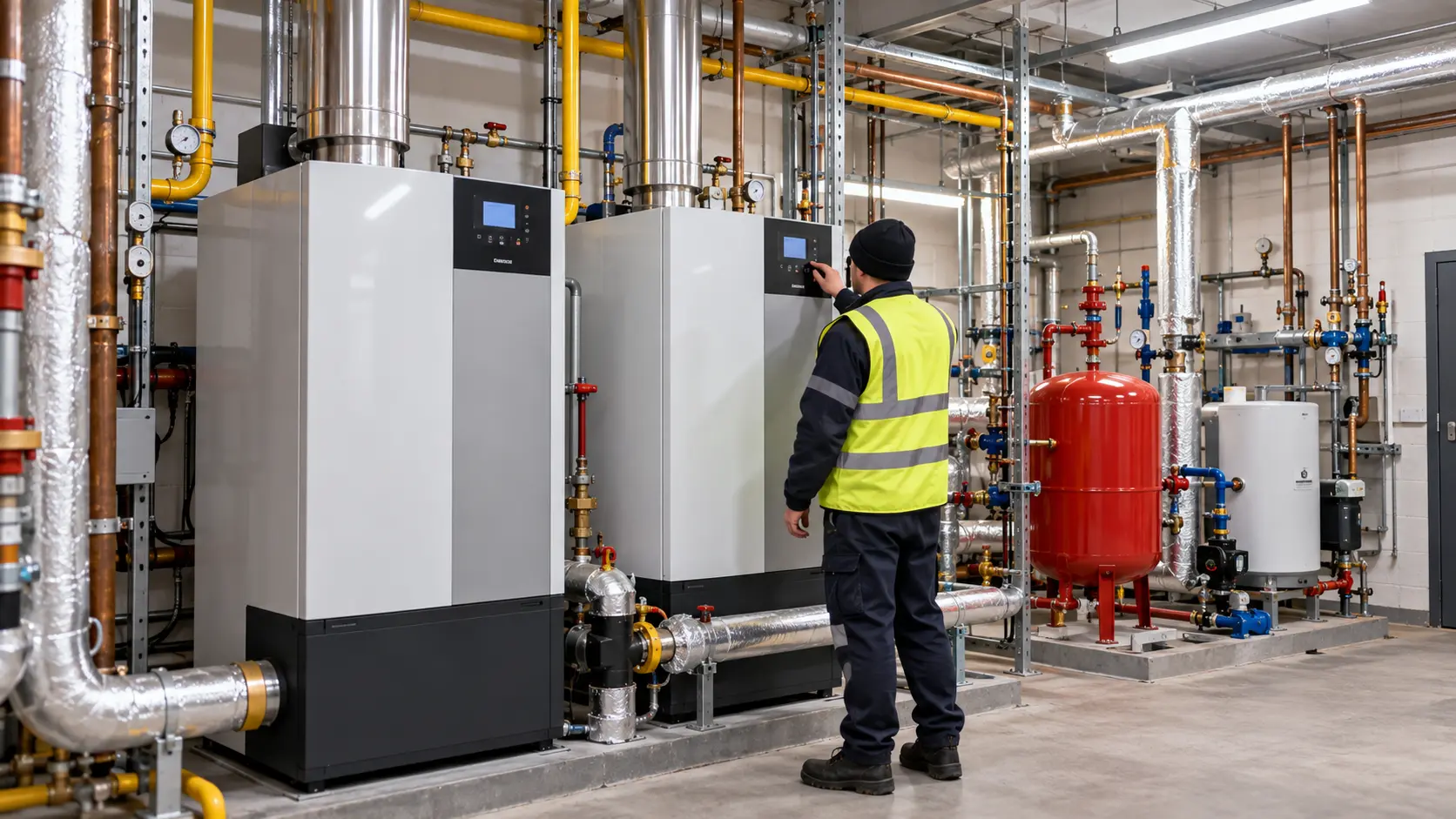
Why commercial boiler servicing matters
- Safety: employers and those in control of premises must keep gas appliances safe for staff, visitors and the public
- Reliability: a breakdown can close an office, shop or restaurant, or affect vulnerable residents in care settings
- Efficiency: well-maintained plant uses less fuel
- Compliance: insurers and landlords often require evidence of servicing
How often?
At least annually for most commercial gas boilers. Heavily used plant, multiple-boiler setups, and buildings where heating is critical may benefit from six-monthly visits. Manufacturer recommendations and your insurer’s requirements should guide the schedule.
What’s checked
A commercial boiler service typically includes:
- Inspection and cleaning of burners and heat exchangers
- Combustion analysis and adjustment
- Checks on flues, ventilation and plant room conditions
- Testing safety controls, including interlocks where fitted
- Checking pressurisation units, pumps and expansion vessels
- Gas tightness testing
- Checking controls, time clocks and building management system connections where relevant
- A written report with recommendations
The engineer should issue a commercial gas safety record for the appliances checked.
Landlords of commercial property
Where a business leases premises, responsibility for boiler maintenance depends on the lease. Some leases put it on the landlord, others on the tenant. It’s important both sides know who’s responsible and that records are kept.
Planning maintenance to avoid downtime
- Schedule servicing outside peak heating months, ideally late summer
- Keep a log of services, repairs and parts replaced
- Budget for replacement of ageing plant before it fails
- Agree response arrangements for breakdowns
- Consider water treatment to protect the system from corrosion and sludge
Commercial buildings in Kent and South London
Commercial heating needs vary widely across Kent and South London, from small offices and shops in Sevenoaks and Bromley to larger premises in Dartford and Croydon. Smaller businesses often have domestic-style boilers, which still need servicing and, where the building is let, may fall under landlord gas safety duties. Larger buildings may have multiple commercial boilers in a plant room.
If a boiler fails outside normal hours, our emergency repairs page explains how to get help.
Frequently asked questions
Is a commercial gas safety certificate a legal requirement?
Businesses must keep gas appliances safe and maintained. Many insurers, landlords and inspectors expect a current commercial gas safety record as evidence. The exact requirements depend on the premises and use.
Can a domestic engineer service a commercial boiler?
Only if they hold the relevant commercial competencies on their Gas Safe registration. Check the engineer’s Gas Safe ID card for the categories they’re qualified in.
How long does a commercial boiler service take?
It depends on the size and number of boilers and the complexity of the plant. Your engineer should give you an estimate so you can plan around it.
Arrange commercial boiler servicing
If your business needs its boilers serviced or a maintenance plan set up, get in touch and we’ll arrange it with you.