

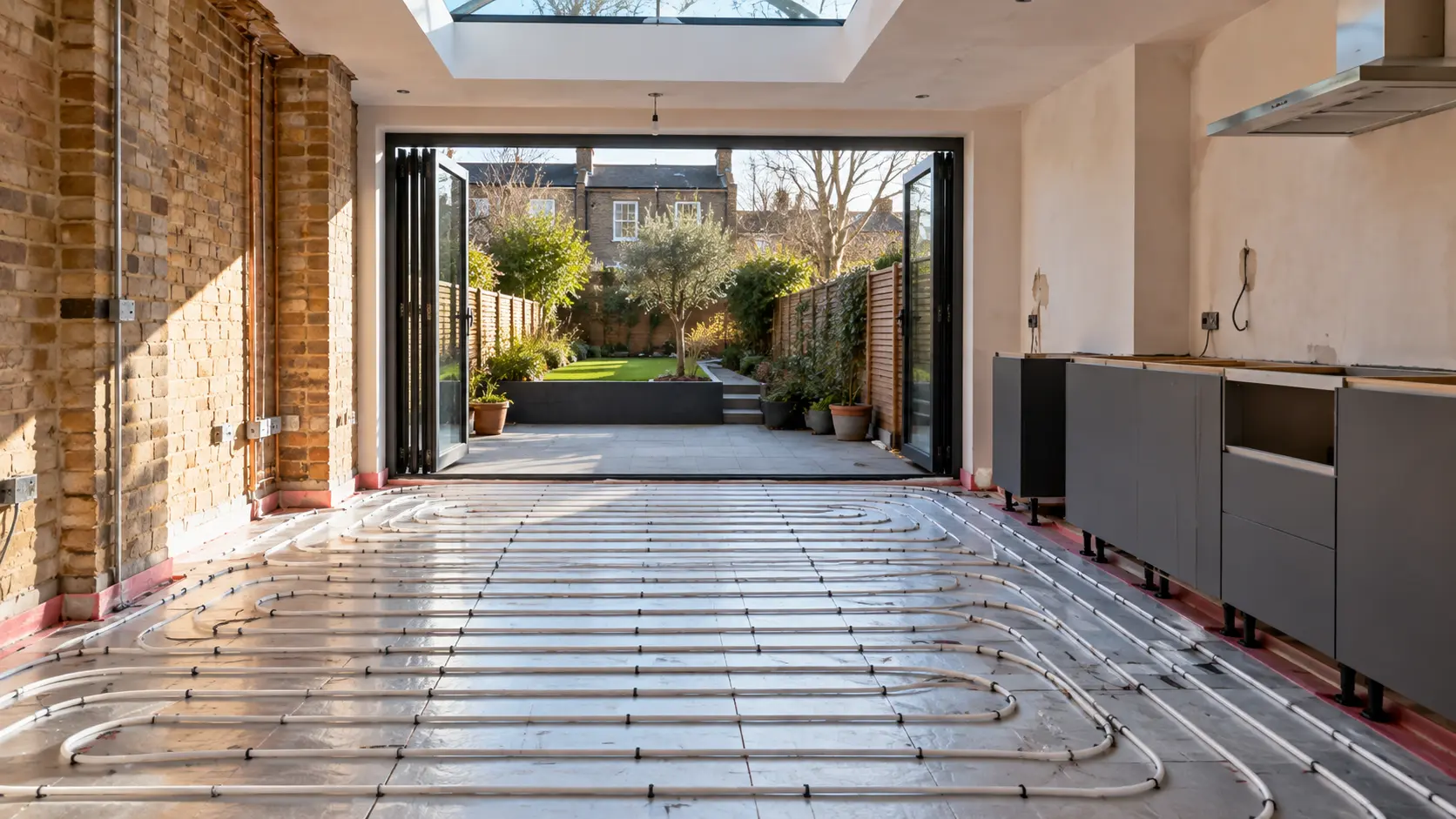
Underfloor heating is usually worth it when it’s planned into an extension, a kitchen refit, a loft conversion or a full renovation, where the floor is coming up anyway. It gives even warmth, frees up wall space and works well with modern boilers and heat pumps. It’s harder to justify as a retrofit in a single room of an older home, where raising floor levels and disruption can outweigh the benefits.
The answer depends on the room, the existing floor and what else is happening to the house. Our underfloor heating page explains how we plan systems.
Why people choose underfloor heating
- Even warmth across the room, without hot and cold spots
- No radiators, freeing up walls for furniture, units and glazing
- Comfortable floors, especially in bathrooms and kitchens
- Lower water temperatures, which suit condensing boilers and heat pumps
Wet or electric?
Wet systems run warm water from the boiler or heat pump through pipes under the floor. They’re best for larger areas and whole floors, and usually cheaper to run over time.
Electric systems use heating mats or cables under the floor finish. They’re thinner and simpler to fit, making them popular in bathrooms and small rooms, but they usually cost more to run over large areas.
Underfloor heating in older South London homes
Victorian and Edwardian terraces across areas like Lewisham, Peckham and Bromley often have suspended timber floors on the ground floor. Underfloor heating can still work, using systems designed to fit between or over joists, but:
- The floor needs good insulation underneath, or heat will be lost into the void
- Floor levels may rise, affecting doors and thresholds
- Older, draughtier rooms may still need a radiator for the coldest days
Rear extensions with new concrete floors are often the ideal place for it, as pipes can go into the screed during building work.
Flooring choices
- Tiles and stone transfer heat best
- Engineered wood works well if rated for underfloor heating
- Laminate and LVT usually work if the manufacturer approves them
- Carpet works but slows heat transfer; use a low-tog underlay
The downsides
- Slower to warm up than radiators, especially screeded systems
- Installation is more disruptive than fitting radiators
- Floor build-up may raise levels
- Repairs are harder, as pipes are buried
Connecting to your heating system
Wet underfloor heating connects through a manifold with its own pump and mixing valve, which lowers the water temperature for the floor. It can run from most combi and system boilers, provided the boiler has enough output. Good controls, such as zoned thermostats or smart heating controls, help it run efficiently.
If you’re planning a new boiler at the same time, a proper survey will check it can handle radiators and underfloor zones together. See our boiler installations page.
Frequently asked questions
Can underfloor heating be the only heating in a room?
Often yes, in well-insulated rooms. In older, draughty rooms, a heat loss calculation will show whether a radiator is also needed.
Does underfloor heating save money?
It can run efficiently at lower temperatures, especially with a heat pump or condensing boiler, but savings depend on insulation, controls and use.
Is electric underfloor heating good for bathrooms?
It’s a popular choice for bathrooms because it’s thin and simple to fit under tiles. Running costs are usually modest for small areas used for short periods.
Talk to us about your project
Planning an extension or renovation and wondering if underfloor heating makes sense? Send us a message and we’ll talk it through with you.