

A heat interface unit (HIU) is the box in a flat or house connected to a communal or district heating network. It takes hot water from the building’s central plant and uses heat exchangers to provide your heating and hot water, without burning any fuel in your home. It does the job a boiler would, but there’s no gas, flue or combustion.
Like a boiler, an HIU needs regular servicing to stay efficient and reliable. Strainers clog, valves stick and settings drift over time. Our heat interface unit page explains how we service and repair them.
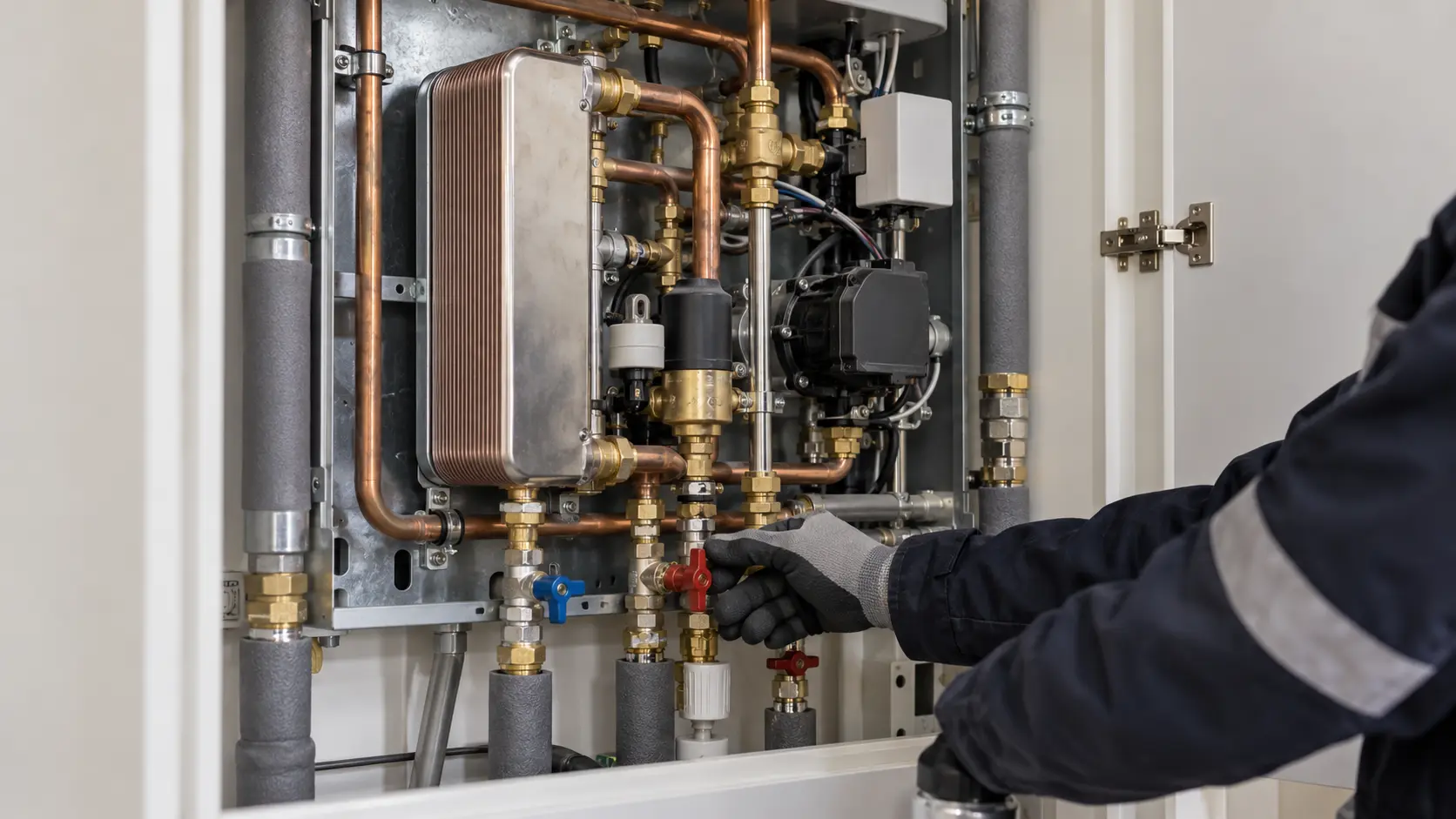
How an HIU works
A heat network pipes hot water from a central energy centre, often in the basement of a block or on a nearby site, to each home. The HIU:
- Receives hot water from the network
- Passes it through heat exchangers, keeping the network water separate from your heating and tap water
- Heats your radiators or underfloor heating
- Heats your tap water on demand, or charges a cylinder in some designs
- Measures how much heat you use with a heat meter, for billing
HIU vs boiler
| HIU | Gas boiler | |
|---|---|---|
| Fuel burnt at home | None | Gas |
| Flue | No | Yes |
| Gas safety check | Not needed for the HIU itself | Required annually for rented homes |
| Heat source | Central plant | The boiler itself |
| Billing | Via the heat network operator, often metered | Your gas supplier |
| Servicing | Recommended, usually annually | Annually |
Common HIU problems
- No hot water or lukewarm hot water, often due to a blocked strainer, a faulty valve or incorrect settings
- Heating not working while hot water does, or the other way round
- Low pressure on the secondary heating circuit
- Noisy operation, such as humming or banging
- Leaks from valves or fittings
- High bills, sometimes caused by poor settings or a faulty heat meter
Some problems start on the network rather than in your HIU, such as low supply temperature from the central plant. A good engineer will check whether the issue is in the flat or the building.
What HIU servicing involves
A service typically includes:
- Cleaning strainers and filters
- Checking valves, actuators and controls
- Checking temperatures and flow rates against the design settings
- Checking secondary circuit pressure and the expansion vessel
- Inspecting for leaks
- Checking the heat meter is working
Manufacturers and network operators often specify an annual service. Well-set HIUs return cooler water to the network, which helps the whole building’s system run efficiently.
Who is responsible for repairs?
Responsibility depends on your lease or tenancy and the heat network operator’s terms. In some buildings, the operator or managing agent maintains HIUs; in others, it’s the leaseholder’s or landlord’s responsibility. Check your lease or heat supply agreement before booking a repair. Landlords should include HIU maintenance in their planning. See our landlord services.
HIUs in South London and Kent flats
Many newer apartment developments across Lewisham, Peckham, Woolwich and Croydon use communal heating with an HIU in each flat, rather than individual gas boilers. If you’ve moved from a house with a boiler, the controls can take some getting used to. Our guide on heating your flat on a communal heat network covers common questions.
Frequently asked questions
Do I need a gas safety certificate for an HIU?
No. The HIU doesn’t burn gas. If there are no other gas appliances in the flat, a gas safety check isn’t needed, but the HIU still benefits from regular servicing.
Why is my HIU hot water lukewarm?
Common causes include a blocked strainer, incorrect temperature settings, a faulty valve or a low supply temperature from the network. An engineer can identify which.
Can I switch my HIU off in summer?
Usually you can turn the heating off at the controls while keeping hot water on. Check the manufacturer’s instructions before isolating the unit.
Book an HIU service or repair
If your HIU isn’t working properly, or it hasn’t been serviced for a while, get in touch and we’ll arrange a visit.