

The first proper frost always catches someone out. One morning the kitchen tap gives a splutter and nothing else, or the loft starts dripping once the pipes thaw. The good news is that you can stop pipes freezing with a few cheap jobs done now: lag exposed pipes, keep a little heat in the house and know where your stopcock is. In this post we’ll cover the pipes most at risk in South London and Kent homes, what to do if one freezes, and when to call our plumbing team.
Why pipes freeze and burst
Water expands as it turns to ice. In a pipe, that builds pressure between the ice and the closed tap, until a joint gives way or the pipe splits. Often you won’t know until the thaw, when water starts pouring out.
Burst pipes cause far more damage than the cost of preventing them. A split pipe in a loft can soak ceilings, insulation and electrics in minutes.
Which pipes are most at risk?
Look for pipework in cold spaces with little or no heat:
- Loft pipes and cold water tanks, especially above insulation, where they get no warmth from the house below
- Outside taps and the pipe feeding them
- Pipes in garages, outbuildings and utility rooms
- Pipes on or through outside walls, including under kitchen sinks
- Pipes under suspended timber floors, common in older terraces
- Your boiler’s condensate pipe, if it runs outside
How to stop pipes freezing
Most of these are quick jobs you can do on a weekend.
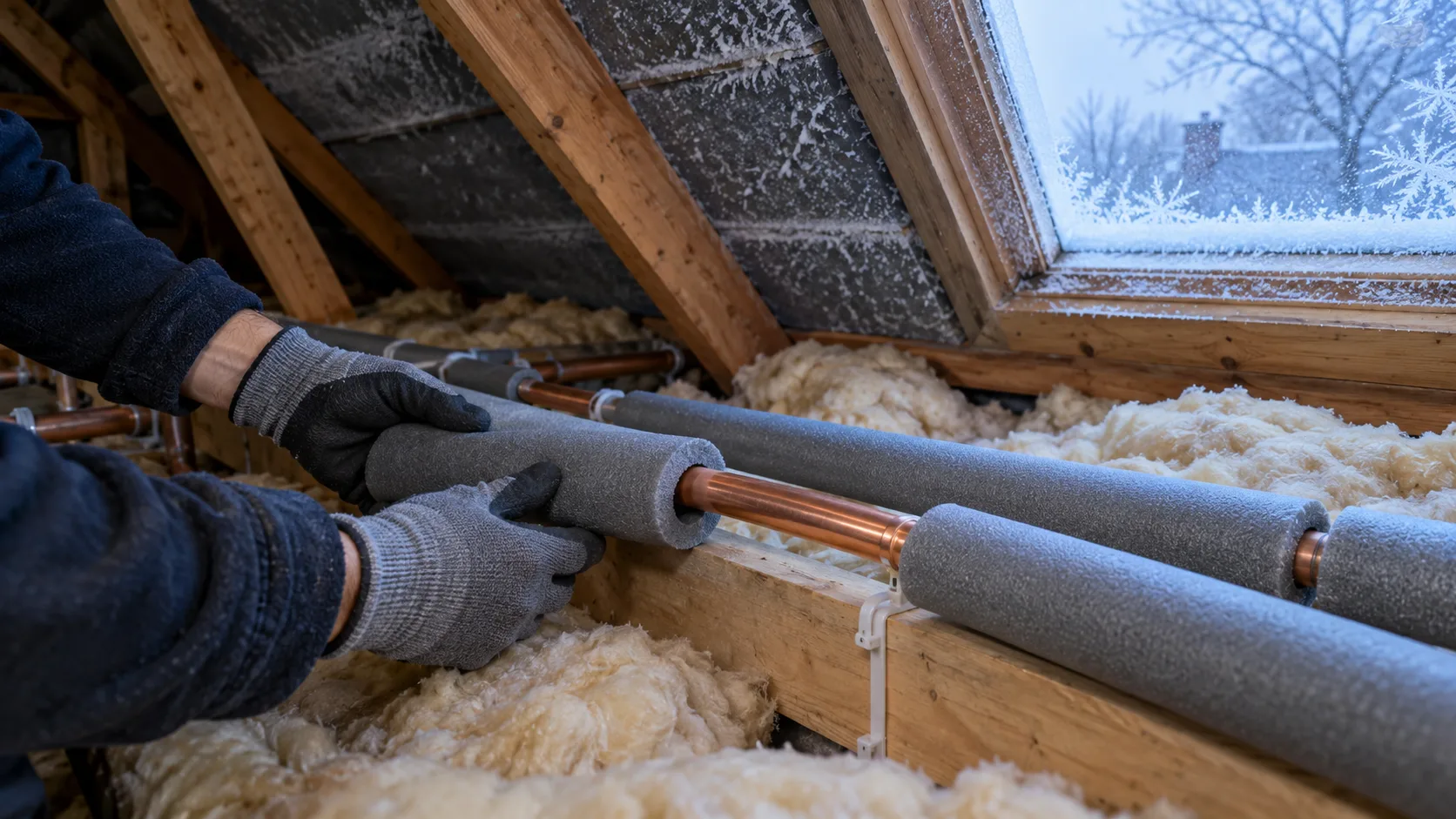
- Lag exposed pipes. Foam pipe lagging is cheap from any DIY shop. Cover loft, garage and under-floor pipes, and don’t leave gaps at bends and joints.
- Insulate the cold water tank. Use a proper tank jacket, but don’t insulate directly underneath it, so some warmth can rise from below.
- Isolate and drain outside taps. If there’s an isolating valve inside, turn it off, then open the outside tap to drain it. A tap cover adds extra protection.
- Keep some heat on. During a cold snap, set your heating to come on for a while each day, or use your boiler’s frost setting. Even a low background temperature helps.
- Open the loft hatch on very cold nights to let some warm air up.
- Fix dripping taps. A slow drip in a cold pipe can freeze and block it.
- Know where your stopcock is, and check it turns. If it’s stiff or leaking, our guide on how to fix a leaking stopcock explains what’s involved.
Going away over winter?
Don’t turn the heating off completely. Leave it on a low setting or frost protection, and ask someone to check on the house if you can. If the property will be empty for a long time, it’s worth turning the water off at the stopcock and draining the system down.
What to do if a pipe freezes
If a tap gives no water and you suspect a frozen pipe:
- Turn off the water at the stopcock before it thaws, in case the pipe has split
- Open the tap the pipe feeds, so water can escape as it thaws
- Warm the pipe gently with a hot water bottle, a towel soaked in warm water or a hairdryer on a low setting
- Start at the tap end and work back towards the frozen section
Never use a blowtorch or naked flame. It can damage the pipe, start a fire and is dangerous near gas pipework.
If a pipe has burst
Turn the water off at the stopcock straight away and open the cold taps to drain the system. If water is near electrics, switch off at the consumer unit, but only if it’s safe to reach. Then call a plumber. Our emergency repairs team can get an engineer out quickly.
Frozen pipes in South London and Kent homes
Many homes across Sidcup, Bexley, Bromley and Croydon are Victorian or 1930s houses with suspended floors, outdoor toilets turned into utility rooms and long pipe runs in unheated lofts. Newer flats aren’t immune either, especially where pipes run through communal areas or outside walls. A quick check of your loft and outside taps before December is time well spent.
Frequently asked questions
At what temperature do pipes freeze?
Water freezes at 0°C, but exposed pipes usually only freeze after a spell of temperatures well below zero, particularly overnight. Pipes in lofts, garages and outside walls are at risk first, so protect those before the coldest nights arrive.
Should I leave a tap dripping to stop pipes freezing?
It isn’t usually needed in UK homes if pipes are lagged and some heat is on. A drip wastes water and can freeze itself in a very cold pipe. Lagging and keeping a low level of heat are more reliable.
Will my boiler stop pipes freezing?
Many modern boilers have frost protection that fires the boiler if it gets very cold. That protects the boiler itself, not necessarily pipes in a loft or garage, so lagging those is still important.
Is a burst pipe covered by home insurance?
Many policies cover damage from burst pipes, but some exclude it if the home was left unheated or empty for a long period. Check your policy wording before you go away over winter.
Worried about your pipes this winter?
If you’ve got pipes in a cold loft you’re not sure about, or a stopcock that won’t budge, give us a call on 020 3722 5095 or drop us a message and we’ll come and check them over before the frost arrives.