

The most common sign of a gas leak is a smell like rotten eggs, which is added to natural gas so leaks can be detected. Other signs include a hissing sound near gas pipes or appliances, dead plants near outdoor gas pipework, bubbles in standing water outside, or a gas meter moving when all appliances are off.
If you smell gas: don’t use electrical switches or naked flames, turn off the gas at the meter if it’s safe, open doors and windows, leave the property and call the National Gas Emergency Service on 0800 111 999. Once the emergency is made safe, a Gas Safe engineer can trace and repair the leak. Our gas leak detection page explains how we help.
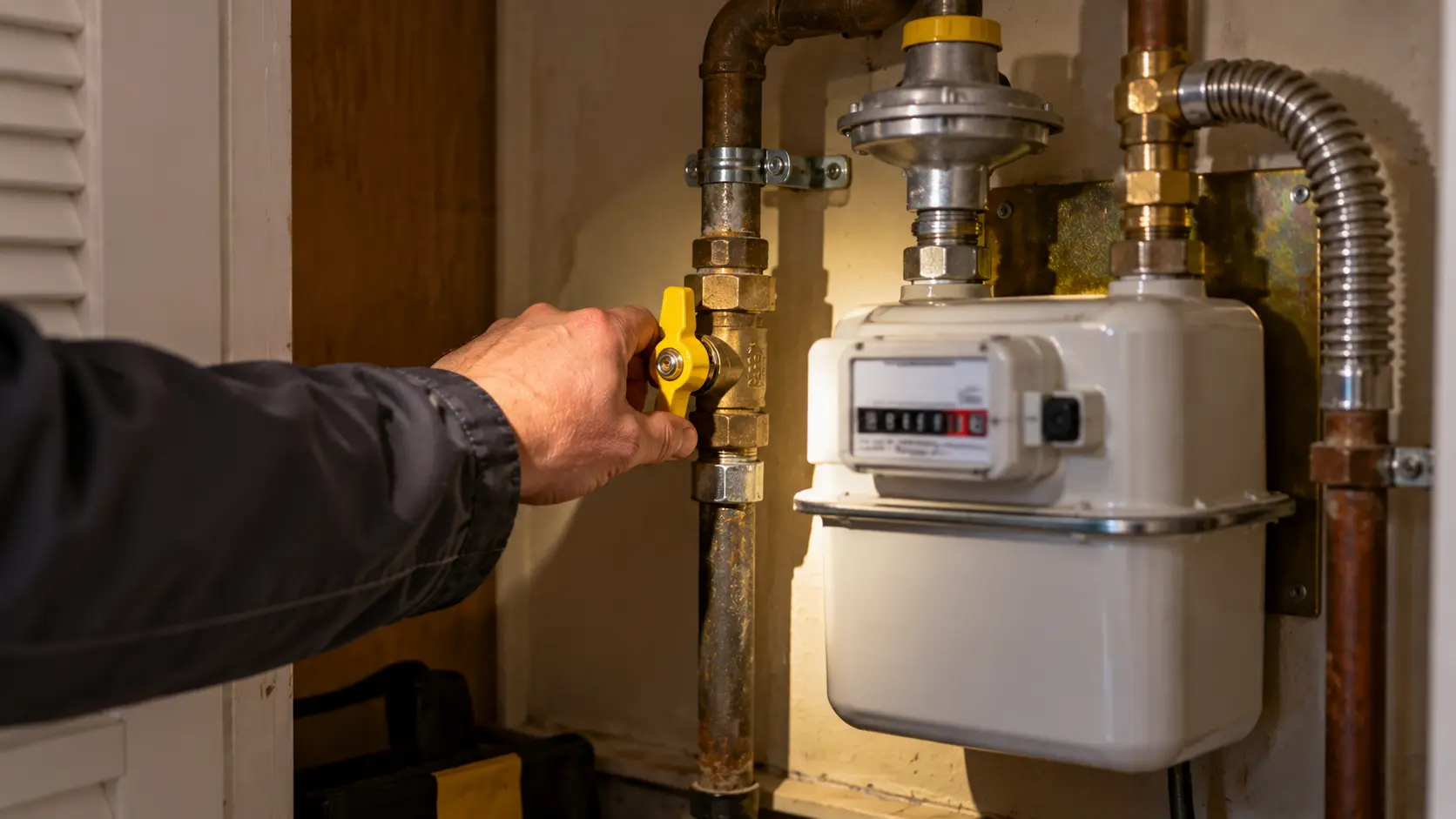
Signs of a gas leak
- A rotten egg or sulphur smell, particularly near appliances, the meter or pipework
- A hissing or whistling sound near gas pipes or appliances
- Higher gas usage than normal without explanation
- The gas meter moving when all gas appliances are off
- Dead or dying plants above or near outdoor gas pipes
- Bubbles in puddles or wet ground outside
What to do straight away
- Don’t turn electrical switches on or off, including lights
- Don’t use naked flames, smoke or strike matches
- Don’t use doorbells or anything that could create a spark
- Turn off the gas at the emergency control valve by the meter, if it’s safe to reach
- Open doors and windows to ventilate
- Leave the property and get others out
- Call 0800 111 999, the National Gas Emergency Service, from outside
- Seek medical advice if anyone feels unwell
If you feel unwell
Gas leaks from faulty appliances can also mean carbon monoxide is present. Symptoms include headaches, dizziness, nausea, tiredness and breathlessness. Get into fresh air and seek medical help. Call 999 in an emergency.
What happens next
The emergency service will make the situation safe, which may mean capping the supply or disconnecting an appliance. They don’t usually carry out repairs to your pipework or appliances. You’ll then need a Gas Safe registered engineer to:
- Find the source of the leak
- Repair or replace faulty pipework or appliances
- Test the installation for gas tightness
- Restore the supply safely
Don’t use a disconnected appliance until it’s been repaired and checked.
Common causes of gas leaks
- Damaged or corroded pipework
- Loose or worn connections on appliances
- Poorly installed or DIY-fitted appliances
- Faulty hobs, cookers or fires
- Damage during building or DIY work
Annual servicing of gas appliances by a Gas Safe engineer helps catch worn parts before they fail. See our appliance servicing page.
Protecting your home
- Fit carbon monoxide alarms in rooms with gas appliances
- Get appliances serviced every year
- Know where your gas meter and emergency control valve are
- Never let anyone unqualified work on gas
Frequently asked questions
Is the gas emergency call free?
Yes. The National Gas Emergency Service is free to call and available 24 hours a day.
Can I smell a carbon monoxide leak?
No. Carbon monoxide has no smell. That’s why CO alarms are important, alongside regular servicing.
Who pays for gas leak repairs?
The emergency service makes the situation safe. Repairs to pipework and appliances inside your property are usually the homeowner’s or landlord’s responsibility.
Get help after a gas leak
If your gas has been capped off after a leak, let us know and one of our Gas Safe engineers will come out to trace and repair it.