

Working from home sounds ideal until your office starts feeling more like a greenhouse by mid-afternoon. Across Sidcup and the surrounding areas, many home offices were never designed to cope with the heat generated by computers, monitors and direct sunlight during summer.
Whether you work from a spare bedroom, loft conversion or garden office, overheating can quickly affect comfort, concentration and productivity. The good news is there are several effective ways to keep a home office cool without relying on noisy desk fans or permanently opening windows.
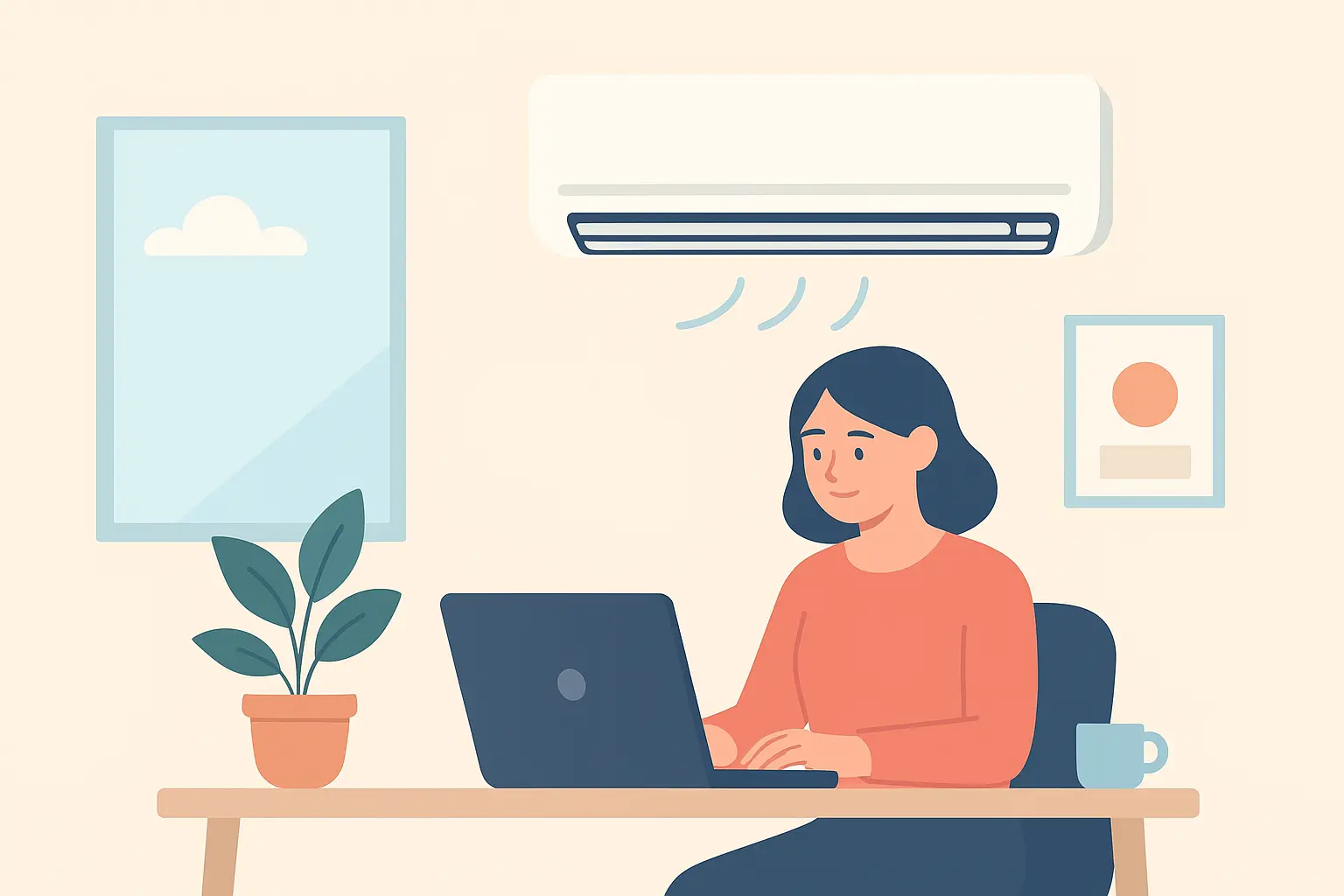
Why Home Offices Get So Hot
Most home offices are smaller rooms with limited airflow. Add laptops, multiple screens, printers and south-facing windows, and temperatures can rise surprisingly quickly.
Common causes of overheating include:
- Poor ventilation
- Heat from electronics
- Direct sunlight through glazing
- Inadequate insulation
- Small rooms trapping warm air
Once temperatures climb above the low twenties, many people notice reduced concentration, fatigue and discomfort during long working days.
Simple Ways to Keep a Home Office Cooler
Before considering larger upgrades, there are several practical steps that can make a noticeable difference.
Block Direct Sunlight
Sunlight through windows is one of the biggest contributors to indoor heat gain.
To reduce this:
- Close blinds or curtains during the hottest part of the day
- Use blackout blinds or reflective window film
- Position desks away from direct sunlight where possible
Even simple changes can help prevent rooms overheating by lunchtime.
Improve Airflow
Good airflow helps remove trapped warm air from smaller rooms.
Try:
- Opening windows early in the morning before temperatures rise
- Creating cross ventilation with doors or opposite windows
- Using quieter tower fans instead of small desk fans
However, in busy areas with traffic noise, keeping windows open all day is not always practical during meetings or video calls.
Reduce Heat from Equipment
Office equipment constantly generates heat.
Helpful changes include:
- Switching monitors off when not in use
- Using energy-efficient LED lighting
- Keeping chargers unplugged where possible
- Moving printers or larger equipment out of smaller rooms
Portable Fans vs Air Conditioning
Many people start with portable cooling solutions, but they are not always effective for all-day use.
| Portable Fans | Air Conditioning |
|---|---|
| Lower upfront cost | Higher initial investment |
| Moves warm air around | Actively cools the room |
| Can be noisy | Modern systems are very quiet |
| Limited cooling effect | Maintains consistent temperature |
| Temporary solution | Long-term comfort |
Portable air conditioning units can help in smaller spaces, but they are often louder and less efficient than fixed systems.
The Best Air Conditioning Option for a Home Office
For many UK homes, a wall-mounted split air conditioning system is the most effective long-term solution.
These systems include:
- A discreet indoor unit
- A compact outdoor condenser
- Quiet operation
- Energy-efficient inverter technology
- Heating and cooling functions
Modern systems are designed to maintain a steady temperature rather than constantly switching on and off, helping improve efficiency and reduce running costs.
If you use your office daily, air conditioning can also help protect laptops, routers and other electronics from overheating.
You can learn more about available systems and installation options here: Home Office Air Conditioning Solutions
Features Worth Looking For
When choosing a cooling system for a home office, some features are especially useful:
Low Noise Levels
Quiet operation is essential during meetings and video calls. Many newer systems include silent or night modes.
Smart Controls
App-based controls allow you to cool the room before starting work or adjust temperatures remotely.
Energy Efficiency
Look for inverter-driven systems with strong energy ratings to keep running costs manageable.
Heating Functions
Most modern air conditioning systems can also provide efficient heating during winter.
How Much Does It Cost to Run?
A common concern is electricity usage, but modern systems are generally more efficient than many people expect.
To keep running costs lower:
- Keep doors and windows closed while cooling
- Set realistic temperatures
- Use timers or smart scheduling
- Service the system regularly
A properly sized system will cool the room more efficiently than an undersized portable unit constantly running at maximum power.
Is Air Conditioning Worth It for a Home Office?
If you work from home regularly, comfort has a direct impact on productivity. A cooler workspace can improve focus, reduce fatigue and create a more professional environment for calls and meetings.
For occasional use, fans and ventilation may be enough. But for daily home working, especially during warmer months, many homeowners find a dedicated cooling system makes a significant difference.
If you are considering a more permanent solution, contact us today for advice on the right system size and layout for your workspace as well as a free installation quote..